
On the Mend at The Bend (My Personal 10 Tips for Healing After Surgery)
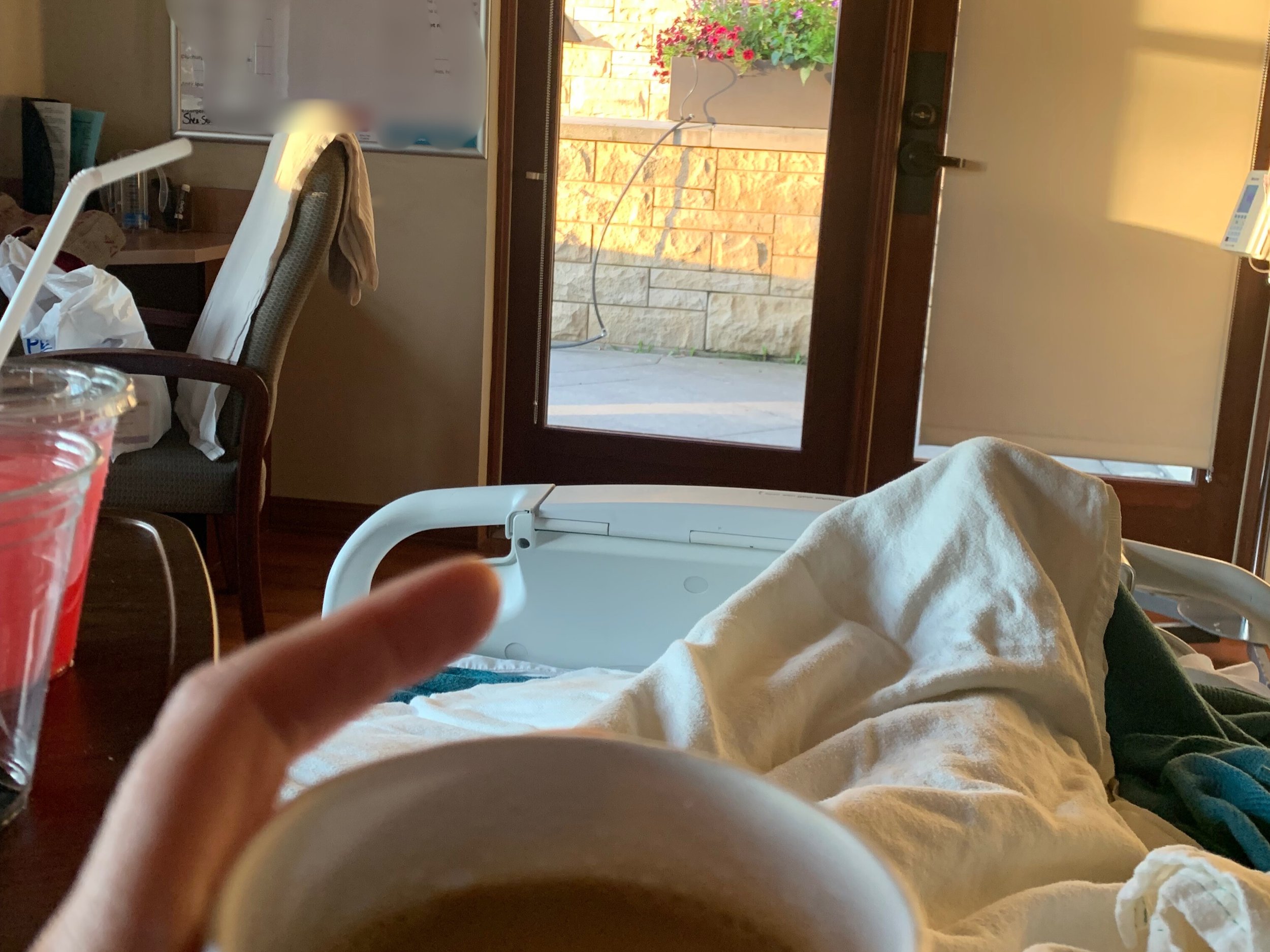
First Cup of Coffee with a View
I spent 5 days in the hospital and have been sitting around doing practically nothing for more than 4 weeks. Here’s what I’ve learned about being a patient, a doctor and a human.
I’ll spare you the gory details. I had an unexpected emergency surgery, and 6 weeks of rest are required before I can lift, push or give a decent adjustment again. As a doctor I can’t help but share my reflections on healing. I hope these tips might reach someone struggling with pain, recovery or living with physical discomfort.
1. Family and friends are medicine. My son flew from Vermont to help me. His face, his smile, his reassurance gave me hope and courage. There is nothing like the power of love.
2. Good thoughts are uplifting. Being thought of by others brings you out of the lonely places. I loved the flowers and texts and heart emojis I got and am still getting. Reaching out matters.
3. There and those that are doers. Let them do. They make soup, they clean your house, they bring your underwear to the hospital, they take care of the dogs, and they hold things together you didn’t even know needed tended. There are also those that let you sleep, guard you, check in, and remind you that you are okay and should go back to bed. I see you. Thank you.
4. There are those that love and hug, touch and tuck you in. I am grateful for every nurse and doctor that straightened my messy bed and touched my toes as they left. There are people in many roles that added to my recovery simply by being good at their jobs and caring. Presence comes in many forms. Thank you from the bottom of my heart.
5. Healing is as much physical as it is mental. Pain, medication, fear, the unknows all put your body in fright or flight. We can’t heal under the influence of the stress response. Heck, I’m a yoga teacher and I know how to meditate and breathe but danged if I do it well when I need it most. Thanks to U-Tube I have diligently used meditation recordings 2 or 3 times a day to settle my worries, turn on my healing systems, get back to my emotional center, and heart center, and do the work of emotional healing for wholeness. It aids in the rest-endless guiltless rest.
6. Self-advocacy is the long game of health and recovery. Realistic expectations are anyone’s best guess. Physicians, me included, can only do so much. People have weird anatomy, they have old injuries, they have systemic inflammation, multiple problems and on and on. I must believe my doctor did all he could to fix me and then I must take the personal responsibility of much of the other “stuff.” Much of the other stuff will remain lifelong rehab and self-care. Not new news to me as I’ve always believed chiropractic care is as much injury care as it is maintenance and self-care. I too will be upping my rehab and self-care routines.
7. Hope and encouragement. You can’t focus on the what ifs. Whether it comes from others or you muster it yourself you’ve got to believe there is a pot of gold at the end of the rainbow. The little wins matter more during hard times. As a doctor, I have a renewed belief in the power of baby steps.
8. A pause is compassion. On the worst day I was afraid of dying and yet I couldn’t cry. Years of being strong built a dam that was only penetrated by kindness and compassion. Tears provide relief, but only if you can shed them. Compassion looks like stopping whatever you are doing and focusing on a someone having a rough moment and just waiting for them and offering reassurance. At one point two nurses were stuffing a tube up my nose and down my throat and I was gagging and bleeding and begging them to stop. They were trying to help me, I understood that, but I just needed a minute to settle down. A pause is compassion. A touch on the shoulder is compassion. A thoughtful decision when you can’t make one is not pressuring it is patience. Allowing a moment, transferring your confidence to a vulnerable patient is not a moment wasted. For me, I’ve noticed the pause is powerful, a reassuring touch, a hug, a shoulder squeeze are what I needed to relieve my worry, ease my fears and muster just a little more courage.
9. Healing takes time. This is a hard one. We can influence a timeframe but, in the end, things take as long as they take. Bones take about 6-8 weeks, muscles can take 3-12 weeks, tissues have timeframes and must go through the actual phases of repair. By understanding and having realistic expectations I hope to influence my healing by doing what I know to reduce inflammation, increase strength and stamina and give my body the best chance at repair. My mind struggles with denial and acceptance to understand what I can’t see on the inside. It’s easier when you can actually see a bruise fading away or an x-ray with a healed fracture or a scar forming over a cut. It’s harder to not see. If MRI or CT is the only way to know, they have limitations in cost and quality, we are left with trusting what we cannot see. We must trust time to heal. We all have a different relationship with time and whether there is or isn’t enough of it. If I want healing, I must respect its agenda, not mine. A hard but necessary pill to swallow. I am reminded not only for myself but my patients who ask me for a quick fix or question their own longstanding problems. Again, this is the long game.
10. Acceptance and Gratitude. Our bodies have problems and many of them are silent or in process. Despite healthy lifestyles or practices we are who we are and are dealt our own set of cards physically and in life. Learning to work with what we have going on rather than pushing through is a life skill. Healing offers layers of growth opportunities and although not necessarily fun, we can learn a lot about ourselves and others in the process rather than resist or hate it. Gratitude flows, whereas, resistance stagnates.
I hope these tips help you along your own healing journey or feel free to share with someone you know who could use encouragement or perspective.
I’m determined to make this pause in practice a time for healing and recovery and for it to lend itself to my patient’s health journeys.
